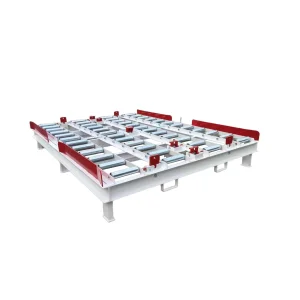
 Chidge Dolly
1. Global Procurement Dynamics of Aircraft Ground Power Units (GPU)
The commercial aviation sector, military defense networks, and specialized aerospace research organizations are undergoing a massive transition. Aircraft require steady, reliable, and clean electrical power while parked on the ground for avionics testing, pre-flight preparations, and environmental system runs. Standard commercial utility power at 50Hz or 60Hz is incompatible with aircraft systems, which require a strictly regulated 400Hz alternating current (AC) or low-voltage direct current (DC) supply.
Historically, the aviation sector relied heavily on diesel-engine-driven GPUs. However, geopolitical mandates, airport decarbonization targets, and carbon taxation policies have pivoted global procurement towards solid-state (static) frequency converters and battery energy storage system (BESS) ground power units. In Europe, initiatives like the "European Green Deal" require airports to cut apron emissions, directly fueling the purchase of electric and hybrid towable GPUs. In North America, the FAA's Voluntary Airport Low Emissions (VALE) program provides funding to transition to zero-emission ground support equipment (GSE).
SEO Insight: Semantic Search Mining - Aviation procurement officers search for terms like "MIL-STD-704F compliant ground power source", "400Hz solid state frequency converter efficiency", and "28.5V DC GPU aircraft starting transients". Providing clear, mathematically precise technical benchmarks is key to establishing expertise under Google’s E-E-A-T guidelines.
2. Macro-Industry Solutions: Grid-Tied vs. Mobile Battery Systems
Airports deploy two main architectures for ground power distribution:
A. Point-of-Use (POU) Solid-State Frequency Converters
Static ground power units are installed directly on passenger boarding bridges (PBB) or under the apron surface. Configured with a 50/60Hz grid input, they employ double-conversion topology (rectifier/inverter) utilizing insulated-gate bipolar transistors (IGBTs) to supply clean, high-precision 400Hz power. POU configurations reduce transmission voltage drop and eliminate the maintenance footprint associated with internal combustion engines.
B. Mobile Battery & Energy Storage Ground Power Units
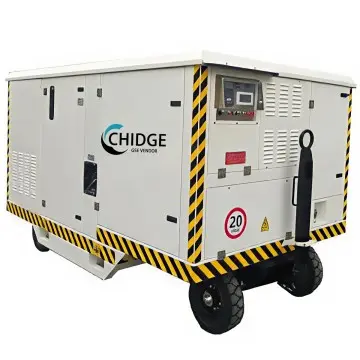
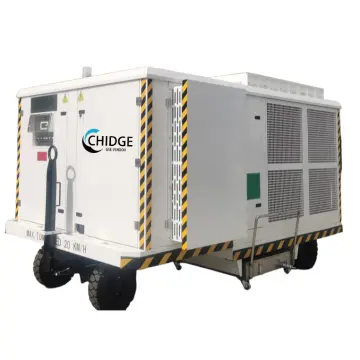
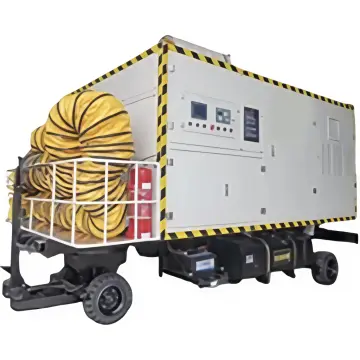
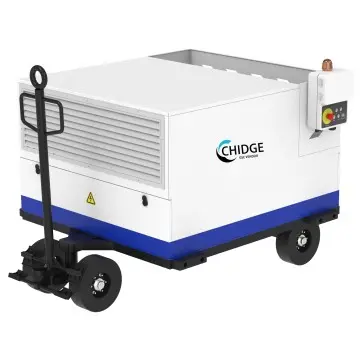
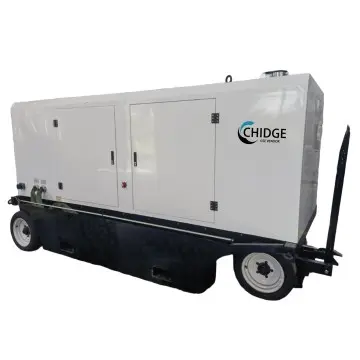
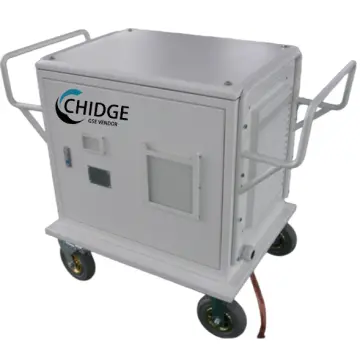
For remote stands, military airfields, or hangar bays lacking fixed infrastructure, mobile towable GPUs are essential. Combining lithium-ion battery chemistries (such as LiFePO4 for thermal stability) with advanced power electronics, battery-driven GPUs run silently, eliminate localized carbon emissions, and offer peak output capabilities for demanding engine starting cycles.
3. Technical Roadmap & Power Electronic Architecture
A high-performance GPU relies on advanced engineering across several critical stages:
- Galvanic Isolation: Input and output isolation transformers prevent common-mode electrical noise and protect the aircraft’s delicate avionics suite from grid transients.
- Total Harmonic Distortion (THD): Strict limits (THD < 2% under linear loads) are required to avoid disrupting communication networks and autopilot gyros during testing.
- Dynamic Response Time: Active voltage regulation responds to sudden step-load changes (from 0% to 100% load) in under 10 milliseconds, maintaining voltage tolerance bands within ICAO and MIL specifications.
- Thermal Management: Advanced liquid cooling or forced-air cooling systems, rated up to IP55, ensure continuous operation in ambient temperatures ranging from -40°C to +55°C.
| Parameters | Solid-State Static Converter (400Hz) | Diesel Mobile GPU (400Hz/28.5V) | Lithium BESS Towable GPU |
|---|---|---|---|
| Primary Energy Source | Grid Electricity (3-Phase 380V/480V) | Ultra-low sulfur diesel fuel | Lithium Iron Phosphate (LFP) Cells |
| Output Efficiency | >94% (typical at full load) | 35% - 40% (thermodynamic limit) | >90% (round-trip discharge) |
| Acoustic Footprint | <65 dBA at 1 meter | >85 dBA at 7 meters | <50 dBA (negligible) |
| Annual Maintenance | Calibration & filter replacement only | Engine overhaul, oil, fuel filters | Battery management system (BMS) health checks |
4. Global Business Realities: Localization, Logistics & Compliance
Manufacturers of ground support equipment must operate within a complex regulatory landscape. For units destined for the European Economic Area, conformity to CE directives (Machinery Directive 2006/42/EC, Low Voltage Directive 2014/35/EU, and EMC Directive 2014/30/EU) is mandatory. In North America, UL and CSA certifications guarantee basic safety parameters. Furthermore, standard ground power output cables must conform to ISO 6858 for design criteria, and electrical interfaces must match aircraft standard receptacles (per MS25486 or equivalent specs).
Ensuring rapid delivery of parts, on-site commissioning, and comprehensive technical training is critical. High-availability operations, such as hub airport turnarounds, require service-level agreements (SLAs) that guarantee replacement parts and technical dispatch within hours to avoid costly flight delays.