Explore our heavy-duty industrial airport solutions designed for high-tonnage cargo logistics, ramp operations, and modern baggage flow management.
Global Airports Served
Patented GSE Designs
Lower Operational Cost
Certified Manufacturing
Modern commercial aviation has reached a critical juncture. International aviation bodies, including the International Civil Aviation Organization (ICAO) and the Federal Aviation Administration (FAA), are rapidly rolling out aggressive net-zero carbon targets. To meet these compliance benchmarks, airports are shifting from active Auxiliary Power Units (APUs) to advanced, localized, green energy infrastructure. Foremost among this infrastructure is the high-performance Aviation Ground Power Unit (GPU).
By providing clean, reliable, external electrical power during aircraft turnaround cycles, GPUs bypass the necessity to run the jet engines while at the gate or on the ramp. This process results in direct fuel cost reductions, mitigates ramp noise pollution, and eliminates local atmospheric emissions of particulate matter and carbon oxides. Today's GPUs represent a complex combination of power electronics engineering, software diagnostics, and mechanical design, delivering precise frequency conversion (typically 400Hz for modern avionics, or 28.5V DC for narrow-body aircraft and regional turboprops).
In sourcing custom GPU configurations, procurement entities face diverse operational demands across global contexts. The selection of architecture dictates long-term maintenance cycles and operational efficiency:
Using advanced silicon-controlled rectifiers (SCRs) or insulated-gate bipolar transistor (IGBT) frequency converters, solid-state GPUs convert local utility grid electricity (typically 50/60Hz) directly into 400Hz aircraft power. Lacking mechanical moving parts, these static structures boast minimal wear and tear, noise-free operation, and conversion efficiencies exceeding 94%. They are ideal for permanent installations in passenger boarding bridges.
For remote ramp zones where grid access is limited, modern battery-buffered and energy storage GPUs have risen in prominence. Equipped with high-density lithium-ion chemistries, these towable modules store energy off-peak and discharge it clean-power-on-demand. When combined with smart energy management systems, energy storage GPUs yield unmatched flexibility without requiring the continuous idling of a diesel engine generator.
| Performance Metrics | Static Solid-State Units | Diesel Generator GPUs | Energy Storage (ESS) GPUs |
|---|---|---|---|
| Frequency Output Range | 400Hz ± 0.1% | 400Hz ± 1% | 400Hz ± 0.1% |
| Mechanical Wear & Tear | Virtually Zero | High (Engine Components) | Extremely Low |
| Ramp Noise Level (dB) | < 65 dB at full load | > 85 dB at full load | < 60 dB at full load |
| Average Lifetime ROI | High (Low maintenance) | Medium (Fuel costs) | Optimal (Peak shaving potential) |
When procurement officers secure equipment for global operators, they must establish rigorous engineering guidelines. Standard requirements involve meeting IATA AHM (Airport Handling Manual) protocols, MIL-STD-704F (Aircraft Electric Power Characteristics), and ISO 6858 standards. Essential criteria include:
Providing custom-engineered platforms tailored to local airport dimensions, structural limits, and electrical footprints.
State-of-the-art technological capabilities in electronic frequency conversion, structural layout design, and smart IoT control cabinets.
Tested against international aviation safety margins. Robust product resilience that stands up to heavy ramp collisions and load strains.
Sourced from vertically-integrated industrial networks. Ensured delivery schedules even during periods of global cargo disruption.
On-site commissioning support, spare parts availability, and 24/7 technical hotline access for regional airport managers.
As standard airport traffic rebounds and modern aircraft models call for enhanced power dynamics, manufacturing facilities must keep pace. Chinese smart-factories, powered by Industry 4.0 standards, represent a paradigm shift in the fabrication of Ground Support Equipment (GSE).
By leveraging automated precision welding robot structures, IoT-enabled assembly tracking, and vertical integration of crucial raw materials, Chinese manufacturing facilities achieve superior price-to-performance metrics without compromising structural integrity. This vertical integration allows for complete control over the procurement and assembly of frequency conversion components, transformer winding, and structural steel chassis fabrication. The resulting localized supply chain mitigates the risks of international freight delays, providing global buyers with guaranteed delivery dates and consistent pricing models.
Aviation safety is a cohesive discipline; a single weak link on the ramp can lead to costly ground collisions or delays. Ground Power Units must seamlessly coordinate with other essential GSE systems during aircraft turnaround cycles. Our comprehensive product suite is engineered to operate harmoniously across the apron:
A holistic approach to ramp management, combining energy delivery, passenger transfer, cargo flow, and maintenance safety.
Our solutions span 90kVA solid-state units and towable energy storage systems designed to deliver continuous 400Hz power under high peak loads.
Equipped to maintain ideal cabin climates, our Pre-Conditioned Air (PCA) units and cabin heaters interface cleanly with standard aircraft connections.
Including heavy-duty tugs and high-capacity main deck loaders, our equipment maintains precise alignment with GSE safety guidelines.
Answering technical queries from airport engineers, procurement directors, and ground operations managers.
Solid-state GPUs use static frequency converters with no moving parts, resulting in lower maintenance costs, near-silent operation, and zero local carbon emissions. This offers a highly efficient, eco-friendly alternative to diesel-powered generators.
All units are designed and tested to meet IATA AHM 905, AHM 910, and AHM 913 standards, along with ISO 6858 electrical output requirements. This ensures total compatibility and safety when connected to modern commercial aircraft.
Yes, we design and manufacture dual-output units capable of supplying 200V/400Hz AC for larger commercial aircraft and 28.5V DC for regional turboprops or private jets, all from a single chassis.
Our systems feature active line drop compensation, which monitors and automatically adjusts output voltage at the aircraft connector plug. This compensates for voltage losses over cable lengths up to 30 meters.
We implement a strict quality management system under ISO 9001 guidelines, conducting full-load simulation tests, thermal imaging sweeps, and harmonic distortion audits before shipping each unit.
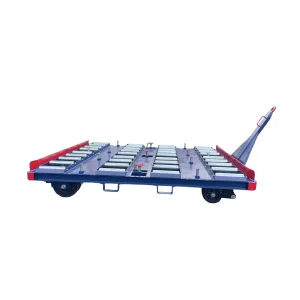
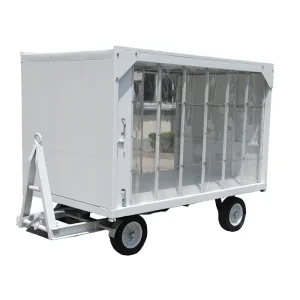
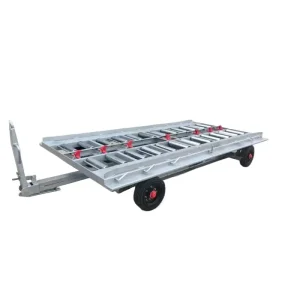
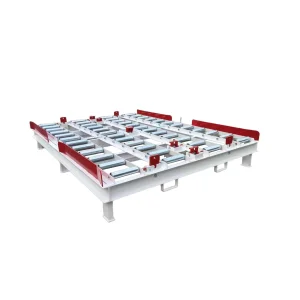
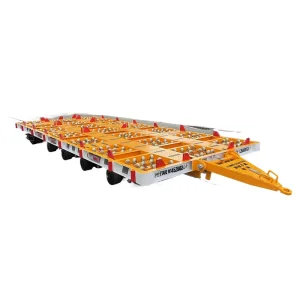
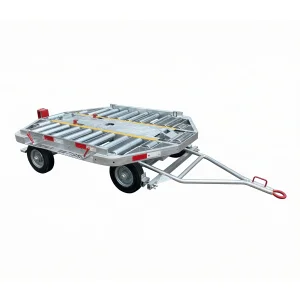
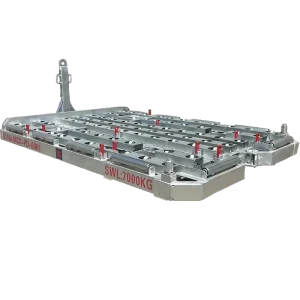
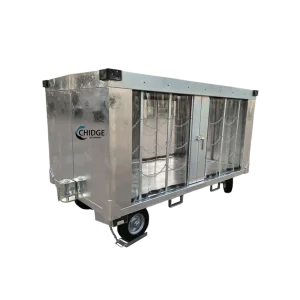
Explore our range of heavy-duty pallet dollies and baggage trailers, designed to support rapid cargo movement across airport aprons.
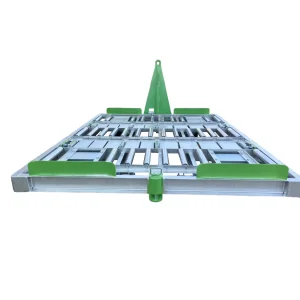
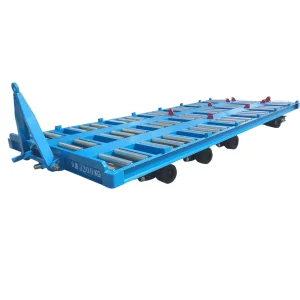
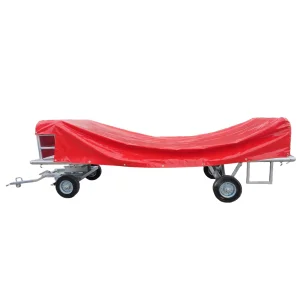
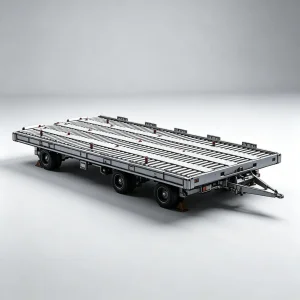
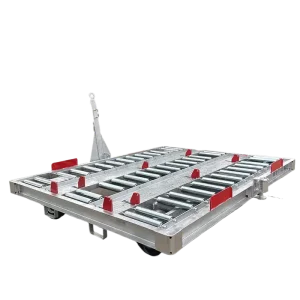
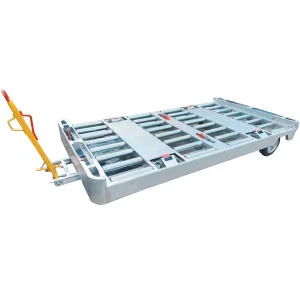
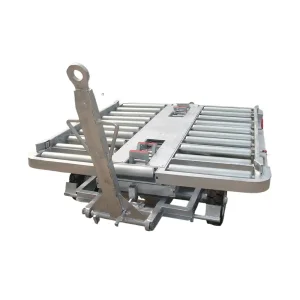
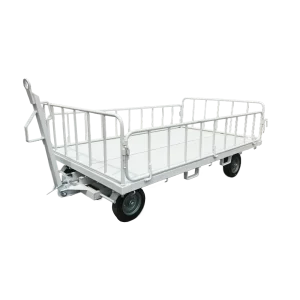
 Chidge Dolly