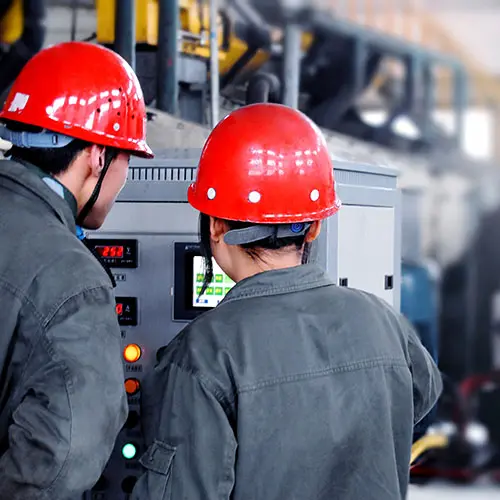
Premium airfield cargo transshipment equipment engineered to match critical pushback and ground logistics workflows.
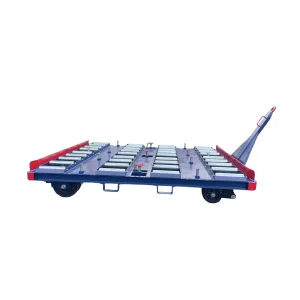
Within the highly synchronized ecosystem of modern airports, ramp management efficiency directly governs airline profitability, safety metrics, and turnaround schedules. At the core of this environment is the aircraft pushback operation, the catalyst for the departure phase of every commercial flight.
“Optimized ground maneuvering prevents secondary delays, lowers taxiway fuel consumption, and represents a foundational pillar in the global transition to net-zero carbon airport operations.”
As standard airport gates experience unprecedented traffic loads and aircraft configurations grow increasingly diverse—spanning regional turboprops to massive widebodies like the A380—off-the-shelf towing tractors often fall short. Custom aircraft pushback design, centered around tailorable drawbar pull, modular drive configurations, and adaptive clamping mechanisms, is no longer a luxury but an operational necessity.
Airports worldwide are experiencing a paradigm shift. Rising passenger volumes combined with physical gate limitations require ground handling equipment suppliers to rethink performance metrics. Traditional heavy diesel pushback tractors are facing strict carbon-reduction mandates from civil aviation authorities. In Europe and North America, regulatory pathways push for complete electrification of GSE by 2030.
Economically, pushback operations are the critical bottleneck of the apron. Any breakdown of a tow tractor or a failure during connection blocks the gate, creating a cascading delay across regional flight routes. Consequently, airport authorities, ground handling providers (such as Swissport, dnata, and Menzies), and airline operators demand equipment that balances operational reliability with extreme mechanical endurance. Custom-engineered aircraft towing tractors, like our CDT700, CDT450, and CDT300 series, are built specifically to address these exact performance targets.
Heavy-duty, high-drawbar-pull vehicle designed to maneuver long-haul widebody aircraft. Engineered with dual-cabin visibility and multi-steering systems.
Mid-range workhorse built for single-aisle jets and medium twin-aisle airliners. Highly versatile with customizable torque delivery curves.
Designed for rapid turnaround of narrowbody and regional jet operations, optimized for short turning circles and high reliability.
Ground handling is undergoing an engineering transition: the obsolescence of conventional internal combustion engine (ICE) tow tractors in favor of High-Voltage Lithium-Ion Battery Electric Vehicles (BEVs) and hydrogen-fuel-cell hybrids. These modern electric towing configurations offer massive instantaneous torque, which is essential for initiating aircraft pushback from a standstill without jerking the nose landing gear.
Furthermore, digital integration via CAN bus technology and IoT telematics provides real-time monitoring of battery state of charge (SoC), thermal management systems, and motor load indicators. These diagnostics allow airport control centers to track operational metrics, run predictive maintenance schedules, and reduce unexpected down-time. Autonomous systems, guided by LiDAR sensor arrays and high-precision RTK-GPS, are also being trialed globally to standardize pushback paths, ensuring centimeter-level accuracy while eliminating collision risks with dynamic ramp vehicles.
Every airport presents unique operating environments. A tow tractor operating at Norway's Tromsø Airport faces sub-zero arctic temperatures, ice-slicked taxiways, and de-icing chemical runoff. Conversely, equipment at Dubai International Airport must perform continuously in 50°C heat amidst abrasive desert dust. Customization is the only way to satisfy these diverging demands.
A pushback operation is not an isolated event. It is part of an integrated turnaround window. While the towing tractor coordinates the pushback, the aircraft relies on a network of ground support systems. Ground Power Units (GPUs), such as our 90KVA Aircraft Ground Power Unit, provide clean 400Hz electricity to power onboard electronics and flight decks, allowing the aircraft to shut down its fuel-hungry Auxiliary Power Unit (APU).
Simultaneously, specialized refueling tankers, catering vehicles, and cargo handling systems service the aircraft on the ramp. By coordinating these individual systems, ground handlers can significantly cut turnaround times. For example, using high-efficiency cargo loaders alongside towable container dollies ensures that cargo loading and unloading occur concurrently with flight-deck departure checks, saving valuable minutes on the tarmac.
CD5207GJJ, CD5580GJJ, CD5341GJJ Tank Refueling Trucks: Outfitted with high-precision pumping, filtration systems, and dual-metering loops for fueling long-range airliners safely.
CDH-60 Cabin Heater & CD190 PCA Units: Supply pre-conditioned air directly to the cabin, keeping passenger areas comfortable without relying on the aircraft's engines.
CD-PBS5062E & CD-PBS5062D Passenger Boarding Stairs: Self-propelled boarding solutions featuring slip-resistant stairs, wind-resistant structures, and adjustable canopy seals.
CDL35000 & CDL14000 Cargo Loaders: Heavy-duty deck lifters designed for rapid container transfer. Features automated roller beds for loading main decks safely.
Looking ahead, the aviation industry is prioritizing complete carbon neutrality and system automation. As airports transition to hydrogen infrastructure, we are researching next-generation fuel cell towing tractors capable of handling widebody aircraft over long working shifts. Additionally, smart aprons will soon feature vehicle-to-everything (V2X) communication. This will allow the pushback tractor to coordinate automatically with control towers and nearby taxiing aircraft, reducing ground delay and optimizing ramp traffic flow.
Combining advanced R&D with rigid QA and proactive support to deliver reliable airport ground equipment.
We leverage advanced finite element analysis (FEA), high-yield steel fabrications, and clean drive architectures. Our engineering department focuses on improving vehicle control, structural safety, and high-voltage electrical safety to ensure consistent operation in all climates.
All products are manufactured under strict ISO 9001 and IATA AHM guidelines. Each chassis and load-bearing weld undergoes non-destructive ultrasonic testing to guarantee structural durability under high shear loads.
With an optimized supply chain and robust production schedules, we ensure timely delivery of custom ground support systems. We handle complex international logistics, including sea freight and heavy-haul road transport, straight to your hangar.
Our technical support team is available 24/7. We offer on-site commissioning, operator training, comprehensive spare parts sourcing, and preventive maintenance packages to extend the operational life of your GSE fleet.
We provide tailorable OEM and ODM solutions to meet specific fleet sizes, airport dimensions, and ground handling requirements. From initial concept drawings to structural testing, our engineers work alongside your operations team to design and deliver reliable ground equipment.
A trusted partner supplying robust ground support equipment to airlines, airports, and cargo handlers worldwide.
Premium Equipment Sales
Custom Airline Logistics
Broad Product Portfolio
Global Quality Assurance
Keep up with modern ground handling technologies, engineering breakthroughs, and airport compliance updates.
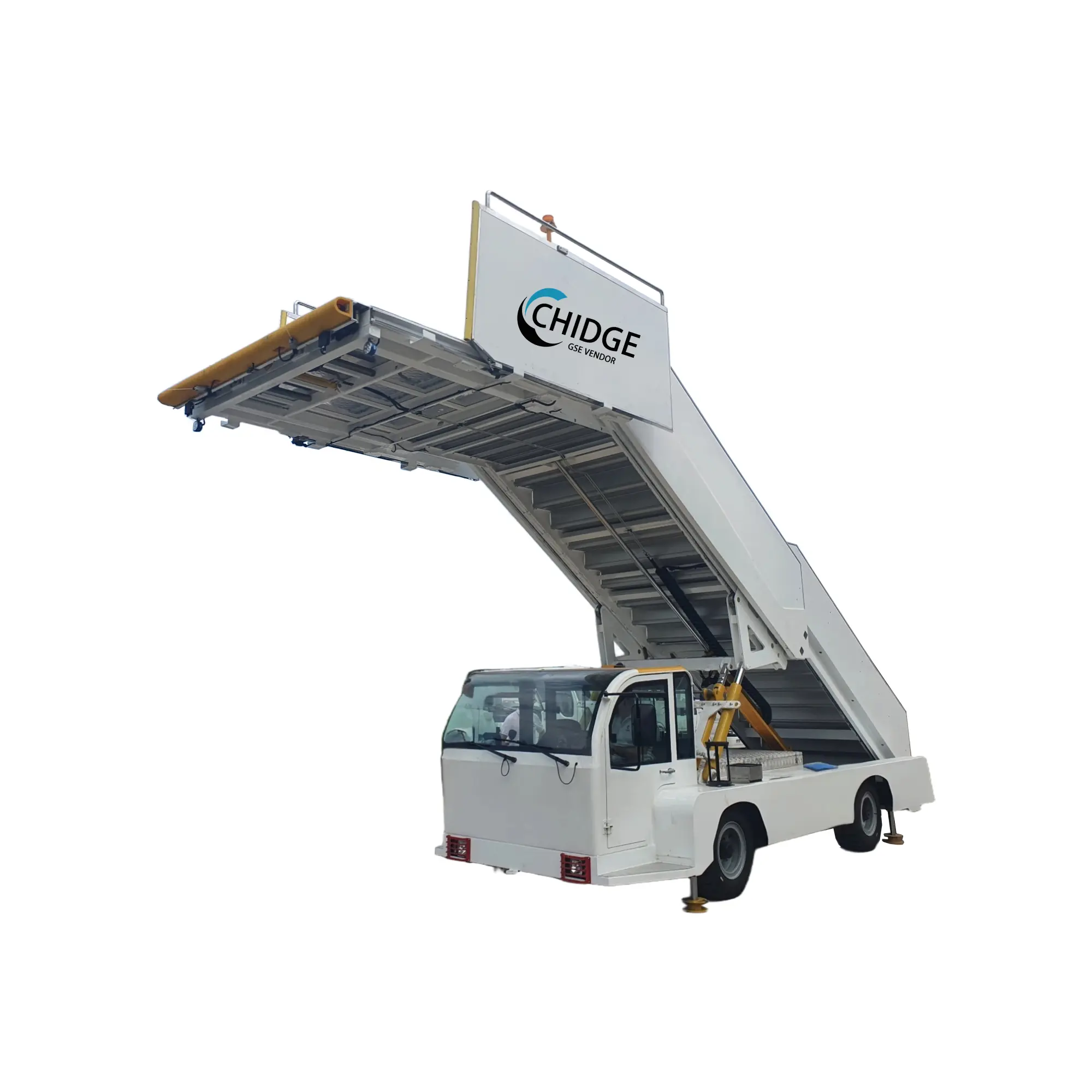
An in-depth analysis of passenger boarding stair safety systems, wind-load ratings, and clean hydraulic lifting architectures designed for modern terminal structures.
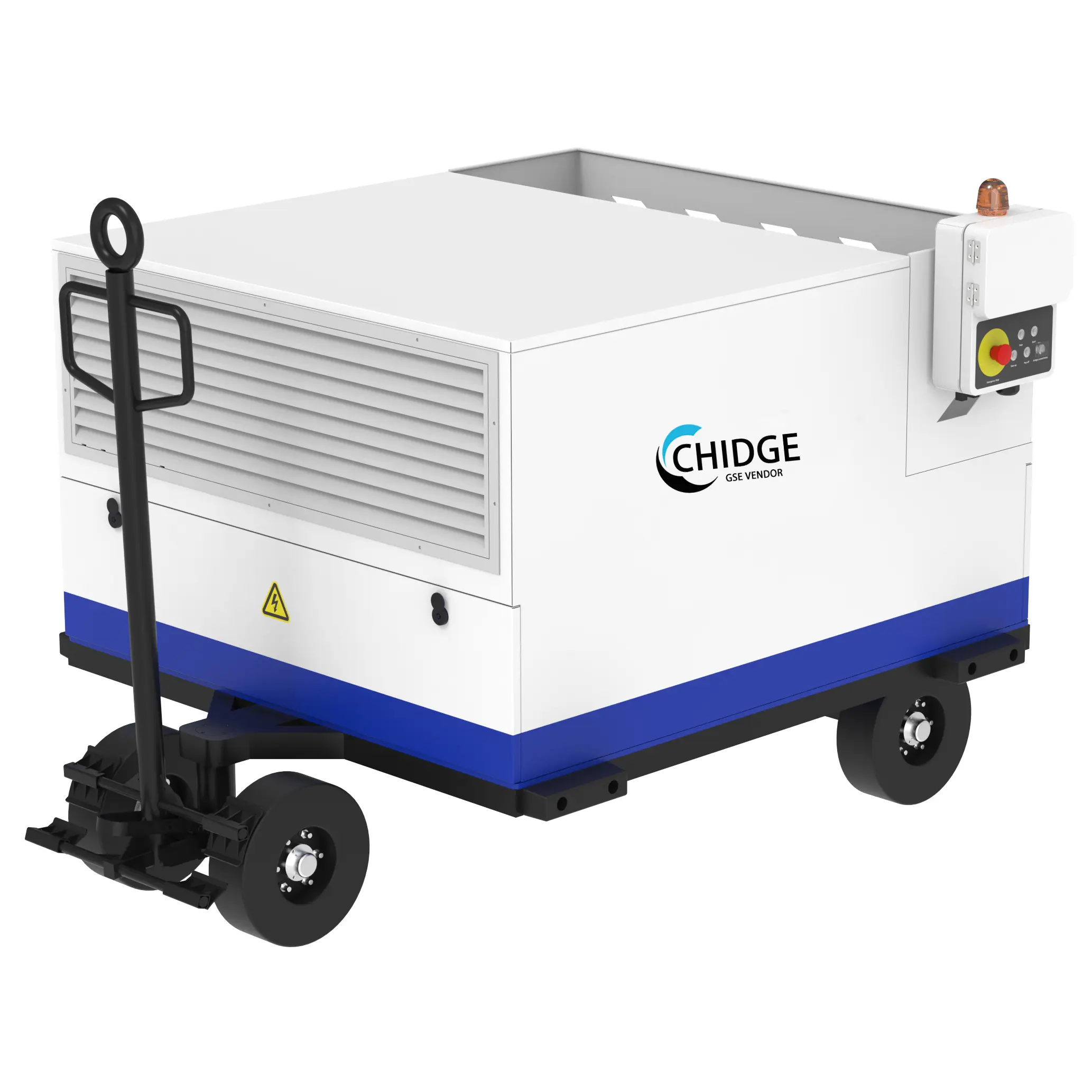
Discover how clean energy storage tech is updating flight-deck power delivery, reducing emissions, and replacing diesel generator models on the ramp.
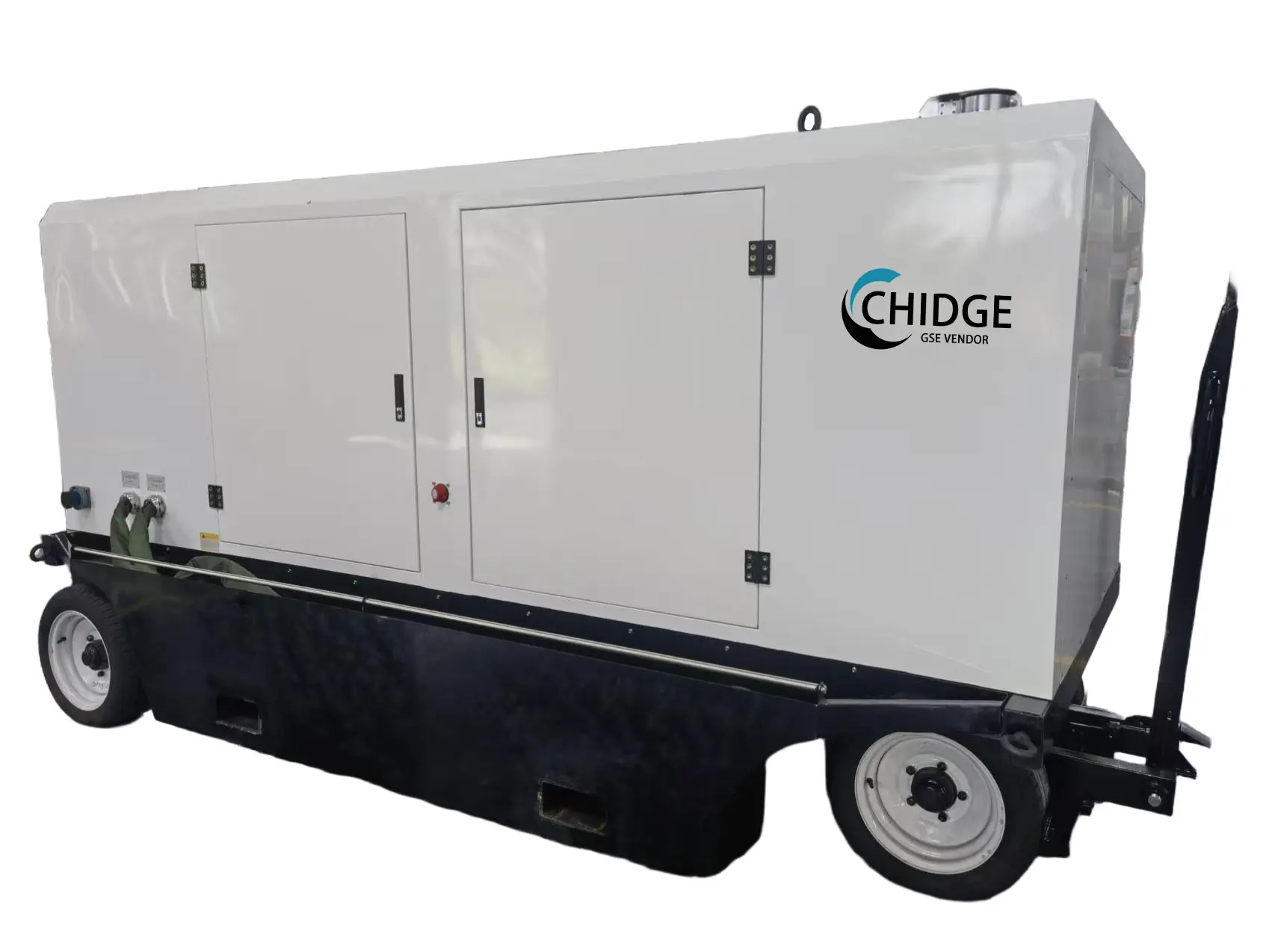
A deep dive into truck-mounted and towable ground power systems. Learn how optimizing electrical output levels supports pre-flight systems checks and simplifies ramp operations.
Technical guidance and engineering answers for ground handlers and procurement managers.
Conventional tractors connect to the aircraft using a model-specific towbar, which requires safety shear pins to prevent overloading the nose gear. Towbarless (TBL) tractors scoop and lift the nose gear off the ground directly. TBL designs allow for faster connections and higher travel speeds during long towing operations, making them a popular choice for busy hub airports.
Drawbar pull is determined by several factors: the aircraft's Maximum Take-Off Weight (MTOW), the gradient of the apron, the friction coefficient of the pavement (especially under wet or icy conditions), and the wind resistance. Our engineers calculate these values to configure the engine torque or electric motor rating of your custom towing tractor, ensuring safe starts and controlled deceleration.
Electric tow tractors deliver zero tailpipe emissions, helping airports meet target environmental standards. They also offer higher energy efficiency, simplified maintenance due to fewer moving parts, and lower operating noise levels. Their electric motors deliver full torque instantly, ensuring smooth, precise control during aircraft alignment.
Our custom tow tractors are equipped with smart torque-limiting controls and angle-sensing systems. These features continuously monitor the angle of the steer axle and the force applied to the towbar, automatically reducing drive power or braking if thresholds are exceeded to prevent stress or damage to the nose landing gear.
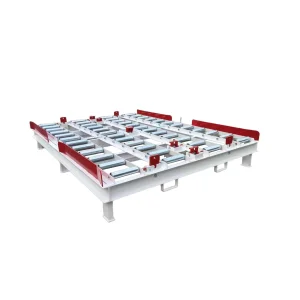
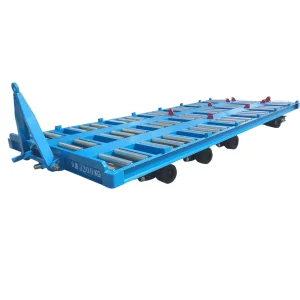
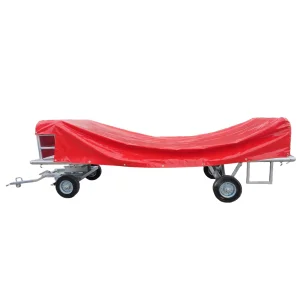
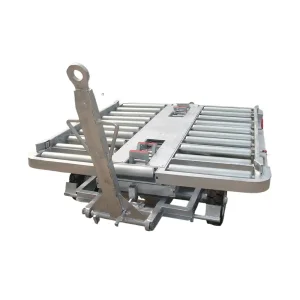
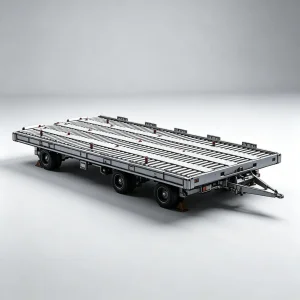
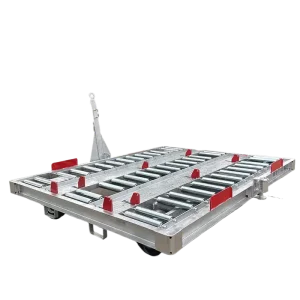
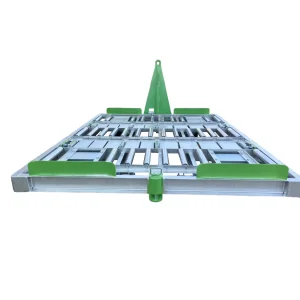
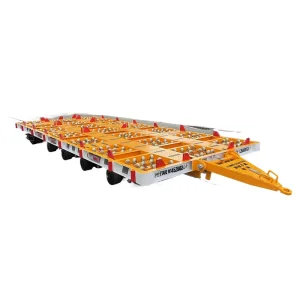
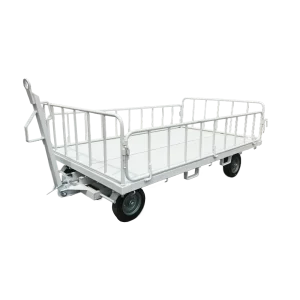
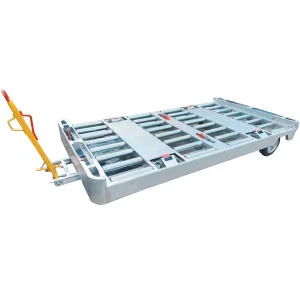
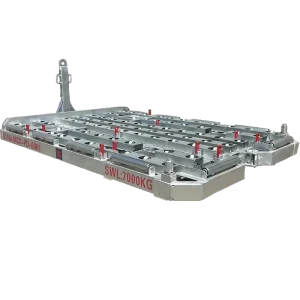
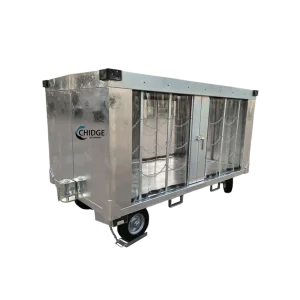
Heavy-duty dollies and baggage carts designed for continuous operation in busy cargo terminals and aprons.
 Chidge Dolly